Manufacturers across the country are facing a common challenge: a growing demand for skilled talent and a shrinking pipeline of young people entering technical careers.
For many students, the issue isn’t lack of ability or interest, it’s lack of exposure.
That’s exactly the gap the California small business, Aura Planning and Sacramento-based non-profit Green Technical Education and Employment (Green Tech) set out to solve with Project IGNITE, an innovative workforce development initiative designed to introduce students ages 16–24 to modern manufacturing through hands-on learning, real industry tools, and direct connections with professionals.
Funded through California’s regional workforce initiatives, Project IGNITE—short for Investigating Growth Needs in Inclusive Technical Education—is helping students discover something many have never seen before: what manufacturing actually looks like today.
And the answer is far more advanced than most people expect.
Manufacturing Has Changed. Students Need to See It.
Many young people still associate manufacturing with outdated stereotypes—assembly lines and repetitive manual labor. But today’s industry is driven by digital design, automation, advanced machining, and data-driven processes.
Project IGNITE exists to show students that reality.
“Manufacturing doesn’t look like it used to look,” says George Suarez VP of Engineering and Workforce Development at Aura Planning and Project IGNITE’s lead instructor. “The skills that are needed for what manufacturing will look like now and into the future are different than what they used to be.”
That shift is exactly why the program focuses on giving students a broad, exploratory introduction to modern engineering and manufacturing technologies.
Suarez wants to give the students exposure to a variety of engineering, “It’s kind of like when you get like a sampler plate right at a restaurant and there’s like a bunch of little things. That’s how I wanted to build a curriculum, to give people exposure to all of these different subsets of manufacturing.”
Over the course of roughly 100 hours of training, participants work through a series of hands-on modules designed to spark curiosity and build foundational technical skills.
Learning by Doing
Instead of relying on lectures alone, Project IGNITE emphasizes hands-on learning.
Students begin with the fundamentals of electronics, learning how to use tools like multimeters and understand basic circuits. They then build a simple but meaningful project of their own.
“We solder a circuit board and build a flashlight so students can understand how a light bulb functions and how that circuit works,” Suarez explains.
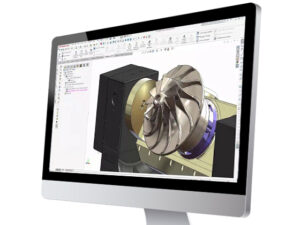
From there, students move into digital design and manufacturing. Project IGNITE chose to use SOLIDWORKS to better represent the tools used in industry and to better prepare students for potential design and or CNC programmer roles.
Using SOLIDWORKS, they learn how to create 3D models and see how those designs translate into real parts. The program introduces the full digital manufacturing workflow, from CAD modeling to CAM programming to machining. “We teach students SOLIDWORKS, CAD and CAM,” Suarez says. “We have small desktop CNC machines so they can understand the workflow; from creating a 3D model to fixturing it and actually cutting their part.”
“In Project IGNITE we don’t just learn to design 3D models in SOLIDWORKS. Students also design sheet metal parts, create prints, assembly drawings, and bills of materials. By building these documents yourself, you gain a much deeper understanding of how to read and interpret them and gain an appreciation of how critical documentation is in manufacturing.”
Students also explore additive manufacturing, measurement tools, and metrology concepts such as tolerances, cost analysis, and automation, all of which are foundational across engineering and production environments. Through this work, students begin to understand that manufacturing is a team effort involving people with many different backgrounds. They see that beyond the individuals making the product, there are many critical roles such as operations staff, quality control professionals, procurement specialists, and estimators who all contribute to bringing a product to life.The goal isn’t to turn them into experts overnight.
It’s to show them what’s possible.
Access Matters
One of the biggest motivations behind Project IGNITE is equity in education.
Not every high school offers the same career technical education programs. For students in districts without strong STEM or manufacturing pathways, exposure to these careers can be limited.
“We’re trying to democratize career technical education,” Suarez explains. “Not all schools have the same opportunities.”
By offering the program outside of traditional school systems and inviting students from across the Sacramento region, Project IGNITE opens the door for students who might otherwise never experience these technologies and offers a high quality training by industry backed professionals who can offer real experience and background behind the in class learnings.
Connecting Students to the Real Industry
In addition to hands-on learning, Project IGNITE connects students directly with the region’s manufacturing community. Industry partners, including the Sacramento Valley Manufacturing Alliance (SVMA) and local manufacturer Roseville Precision Inc., play an active role in shaping the curriculum and hosting facility tours.
Their involvement ensures that students gain exposure to real manufacturing environments, where they can see modern production in action and meet the professionals who work in the industry while learning the skills employers in the region are actively seeking.It’s often the moment when curiosity turns into possibility.
“We can talk about these technologies all day,” Suarez says, “but it’s important for students to actually see what manufacturing looks like in real life.”
For many participants, it’s their first time inside a modern manufacturing facility.
And the experience can be eye-opening.
Teaching Responsibility Alongside Skills
Project IGNITE also emphasizes something just as important as technical knowledge: professional responsibility.
Students are interviewed before entering the program, and instructors look for one key quality – commitment.
“What we were really looking for was commitment,” Suarez says. “Even if I were the best instructor on the planet, none of that matters if you don’t show up.”
Attendance expectations mirror the realities of the workplace. Students can only miss a limited number of classes and must communicate ahead of time if they cannot attend.
“It’s about accountability,” Suarez says. “That’s a lesson we’re trying to teach too.”
To recognize the time and dedication participants invest, students receive a $1,000 stipend upon completion, along with a participation certificate and the opportunity to pursue the SOLIDWORKS Associate certification.
The Students Notice the Difference
Perhaps the strongest measure of the program’s impact is the feedback from students themselves.
“We’ve had students come up to us and say, ‘This is such a well-run program. I’m so glad to be here,’” Suarez says.
For instructors, hearing that from teenagers is both surprising and deeply rewarding.
“And this is coming from 16-year-olds,” Suarez adds with a smile. “I don’t even think I approached adults at that age to tell them they were doing a good job.”
The enthusiasm extends beyond students. During one program discovery day, parents attending the event were so intrigued by the demonstrations that they jokingly asked how they could enroll themselves.
A Model Worth Replicating
Programs like Project IGNITE demonstrate what can happen when educators, industry professionals, and community leaders work together.
The initiative isn’t just about teaching technical skills. It’s about opening doors, sparking curiosity, and helping young people see futures they didn’t know existed.
And it’s a model that could be replicated anywhere.
Across the country, workforce development grants, regional partnerships, and industry collaborations offer opportunities for professionals to contribute to programs like this.
For engineers, manufacturers, and technical leaders looking for ways to give back, the impact can be enormous.
Sometimes it starts with something as simple as volunteering an hour to teach a module, hosting a student tour, or helping develop curriculum.
For Suarez, that kind of industry engagement will be key to expanding Project IGNITE in the future.
“We want to start engaging more industry partners who can spend an hour with the students,” he says. “Maybe they develop a module with us, or come in and talk about what they do.”
The more professionals step forward, the more students can discover what modern manufacturing truly offers.
And that’s how the next generation of engineers or technicians get their start.
Project IGNITE was made possible through funding from Sacramento’s Capital Region’s We Prosper Together Initiative, part of the broader California Jobs First Act aimed at strengthening key industries like manufacturing.
Programs like these exist in many states, but they often require industry partners willing to step forward with ideas and collaboration.
For manufacturers, technology providers, and educators who frequently talk about the skills gap, initiatives like Project IGNITE show what’s possible when organizations actively pursue grant funding and partner with their communities.
Workforce grants are specifically designed to support programs that expose students to modern manufacturing tools and career pathways.
With the right collaboration between industry, education, and local workforce organizations, similar programs could be launched in regions across the country, helping build the next generation of designers, machinists, and engineers while strengthening the manufacturing workforce at the same time.
For more information on the grant that made this project possible, visit: https://jobsfirst.ca.gov/ and https://www.weprospertogether.org/
Share
Meet the Author

SOLIDWORKS Webinars & Power Hours