
Well, the day has finally arrived. November 14, 2025 marks the 30th birthday of SOLIDWORKS as a publicly released software package. While people were able to purchase beta copies at $1,295 for several months beforehand, that first official release really made the whole thing, for want of a better word, “real.” And two people that were there for it, and are still here for it, are me and my twin brother John. Together, we have 60 years of SOLIDWORKS experience.
What has changed? Hardware, for one. Running SOLIDWORKS on a laptop was pure fantasy back then, and a 300-part assembly would tax the most powerful desktop workstation available at the time.
Connectivity is another huge change. Initially, if you wanted to share your design, you put it on a 3.5” floppy disk. Or later, a Zip disk. Eventually, you’d burn a CD or later a DVD. The Internet wasn’t a thing in the very beginning for most people, and the speeds barely supported postage-stamp-sized video, let alone 3D CAD data.
And then there is what SOLIDWORKS itself has become. Initially, it was just “SolidWorks,” which was the company name and the name of the single software product they produced. Now, SOLIDWORKS is a brand — and a portfolio — with over a dozen different applications, and to be clear, when we’re talking about the CAD software itself, we need to say “SOLIDWORKS Design” to clarify what we mean.
My brother John has been training SOLIDWORKS as his entire job for the past 30 years; there is nobody on Earth who has trained more people in more aspects of SOLIDWORKS than him. I’ve asked him to describe how things have changed from his perspective, and here is what he has to say:
“Training has always been important to SOLIDWORKS since the first release. It wasn’t long before there was official training, initially just one book. As time went on and more features were added to the software, the training became two books (“week one” and “week two” is what I called them).
Eventually, the software became so feature-rich that topics like Sheet Metal, Drawings, Assembly Modeling, and Advanced Part Modeling were devolved into their own full courses, with Essentials becoming the core course everyone would begin with. Even File Management got its own course eventually (one of my favorites!) – we thought it was so important that we added it to our Essentials class and continue teaching it in every Essentials class to this day.
Somewhere along the way, the books dropped the included class file CDs in favor of a download solution, and a bit later, the books physically changed size from 8 1/2 x 11 to the current 7 x 9. An eBook solution is now available to go along with the physical books.
While a lot has changed over the years, one thing that has been consistent is the excellent quality of the official SOLIDWORKS training curriculum fostered by a fantastic team at the company, and our commitment to excellent training remains a hallmark of GSC.”

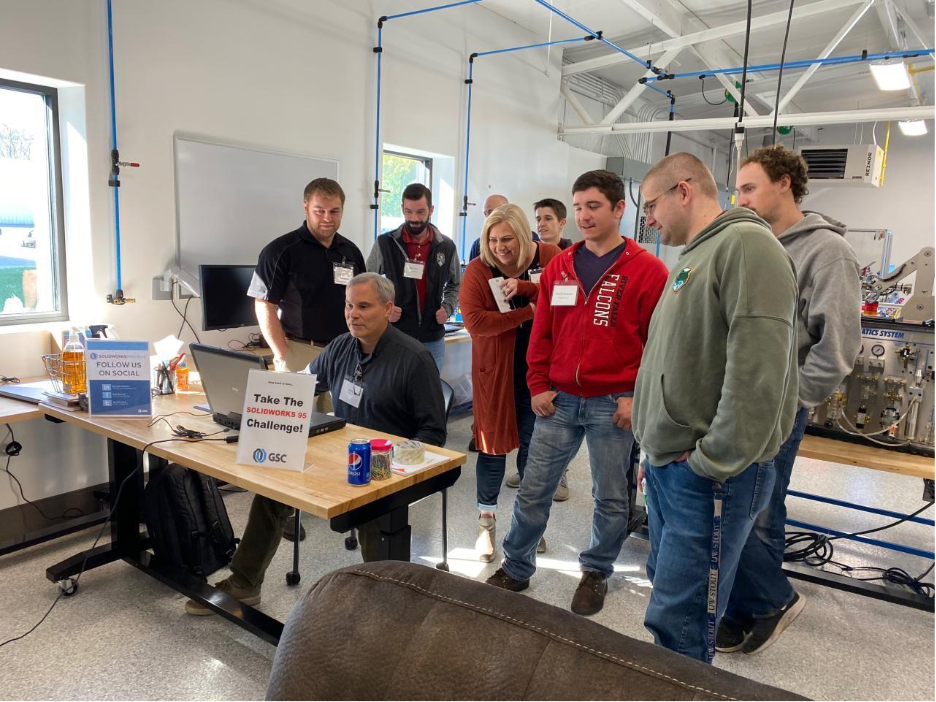
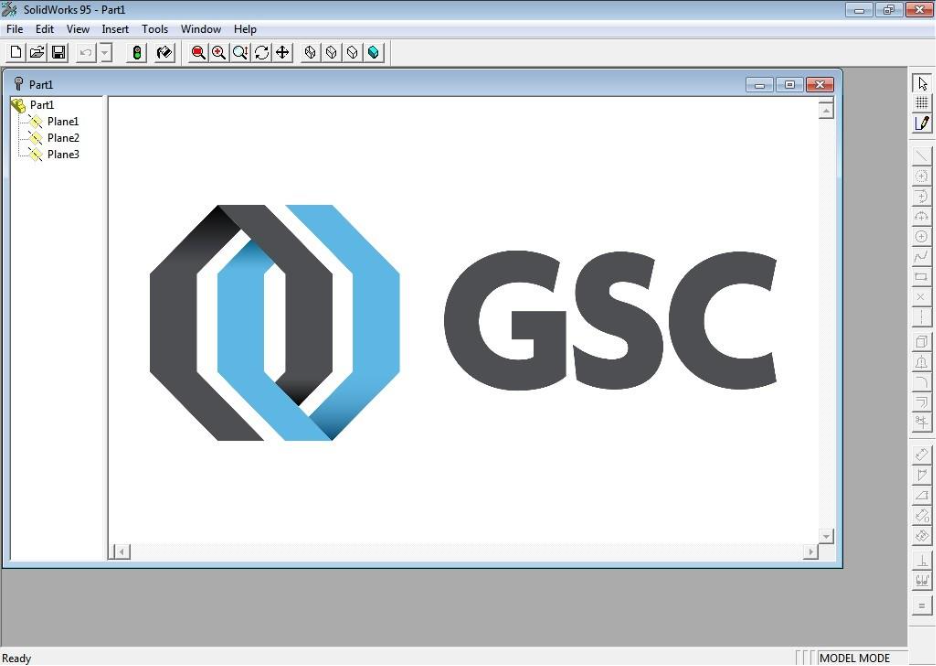
To this day, I still have an old laptop running SolidWorks 95, and if you come to our GSC Technology Center or want me to bring it along to your SWUGN chapter meeting, you can try your hand at the inaugural version of our favorite design tool. I can also “demo” it virtually if you’d like me to – I still remember the “camera” and “boomerang” demos from back in the day, which were very effective at showing “the power of production-level solid modeling on every engineer’s desktop,” which was the initial mission.
So here’s to 60 years of SOLIDWORKS from the Setzer twins! Thanks for working with us, and we’re looking forward to writing our “80 years of SOLIDWORKS” blog – eventually.
Share
Meet the Author

view all posts by GSC 3D
SOLIDWORKS Webinars & Power Hours